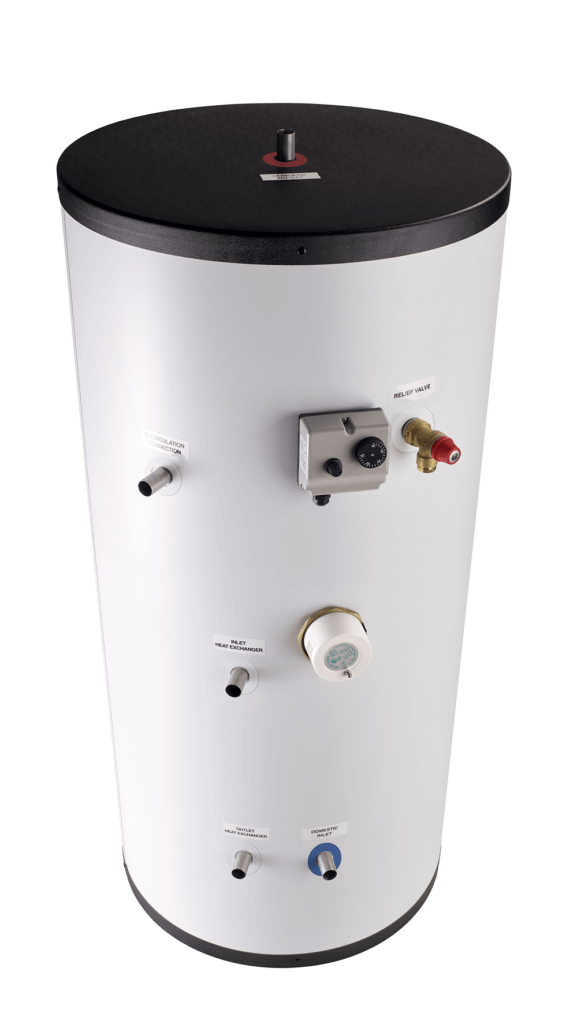
Unvented Cylinder Commissioning Checklist: What Installers Need to Check
Fitting an unvented cylinder is only part of the job. Before handover, the complete system needs to be commissioned so you can confirm that its controls, safety provisions and hot water operation are working as intended and the relevant records have been completed.
This unvented cylinder commissioning checklist provides a practical framework for installers covering the main areas that need attention. Always use the cylinder and system manufacturer’s instructions for the product-specific procedures and settings required during unvented cylinder commissioning.
What Does Commissioning an Unvented Cylinder Involve?
Commissioning sits between completing the physical installation and handing the finished system over to the customer.
At this point, you’re not simply checking whether the taps run hot. Commissioning an unvented cylinder means bringing the complete system into working order, checking its operation and controls and confirming that the safety arrangements perform as intended.
Approved Document G describes commissioning as taking fixed building services from static completion through to working order. This can include testing and adjusting controls and recording satisfactory performance results.
For an unvented hot water system, that means working methodically through the cylinder, incoming supply, expansion provision, safety controls, discharge arrangement and heat source before completing the required records.
The manufacturer’s instructions remain the starting point. Different cylinders and system configurations can have different commissioning procedures, so a generic hot water system commissioning checklist should never replace product-specific guidance.
Unvented Cylinder Commissioning Checklist
The exact checks will vary between products, but the following areas provide a useful framework before handover.
Check the Installation Against Manufacturer Instructions
Start with the installation as a whole. Confirm that the cylinder and components have been installed in the configuration specified by the manufacturer. Check that everything required for that particular system is present and that any product-specific requirements have been followed.
This is particularly important with packaged systems. A component shouldn’t be judged solely on whether it appears suitable in isolation. Its position and function within the complete safety arrangement matter too.
If something differs from the manufacturer’s approved configuration, establish why before moving on to functional commissioning.
Check the Incoming Water Supply and Pressure Arrangements
The incoming supply has a direct bearing on how an unvented cylinder performs, so the relevant supply conditions and pressure-control arrangements should be checked during commissioning.
That includes confirming that the installed arrangement is suitable for the particular cylinder and that the pressure-control components correspond with the manufacturer’s requirements.
Avoid carrying a familiar setting from one system to the next. The acceptable limits and commissioning values depend on the product, so use the figures stated in the current manufacturer instructions.
Where supply conditions fall outside those requirements, resolve the issue before treating the system as ready for handover.
Check Expansion Provision
As stored water heats, it expands. An unvented system therefore needs an appropriate means of accommodating thermal expansion without compromising its pressure control.
Depending on the cylinder design, this may involve an external expansion vessel or another manufacturer-approved arrangement.
During commissioning, check that the expansion provision matches the system design and has been set up in accordance with the manufacturer’s instructions. Where an expansion vessel forms part of the installation, its condition and commissioning requirements should also be dealt with using the values specified for that system.
There isn’t a single vessel size or set-up value that applies to every unvented cylinder, so product documentation should always take precedence over a generic rule of thumb.
Check Temperature and Pressure Safety Controls
The safety controls deserve more than a quick visual check. Requirement G3 of the Building Regulations covers hot water safety, including protection against excessive temperature and pressure. Approved Document G provides guidance for unvented systems and states that appropriate independent safety devices should protect stored hot water from exceeding 100°C.
As part of commissioning, confirm that the safety controls required by the cylinder or system manufacturer are present and that their operation has been checked in accordance with the prescribed commissioning procedure.
That can include temperature protection, pressure relief and other controls forming part of the approved safety arrangement.
Safety devices shouldn’t be bypassed, modified or treated as interchangeable without appropriate manufacturer support. If the installed arrangement differs from the specification, investigate it before the system is handed over.
Check the Tundish and Discharge Arrangement
The discharge route is part of the cylinder’s safety system, so it needs to be included in commissioning rather than treated as finished pipework that no longer needs attention.
Check that discharge from the relevant safety devices is conveyed through the intended route and that the tundish and final termination follow the applicable guidance and manufacturer instructions.
Approved Document G provides detailed guidance on discharge arrangements, including visibility at the tundish and the need for the discharge pipe to terminate somewhere that does not present a risk to people nearby.
Things such as the pipe material, route, sizing and termination are installation-specific. Check them against the manufacturer’s documentation and Approved Document G rather than relying on a layout used on a previous job.
Check System Controls and Operation
Once the physical and safety arrangements have been checked, the system needs to be run and its controls verified.
The exact process will depend on what’s heating the cylinder. A boiler installation, full heat pump system and hybrid arrangement can have different controls, operating strategies and commissioning requirements.
Check the complete system against its approved design, including how the heat source and cylinder controls interact. Where external controls, sensors or other components form part of the arrangement, make sure these operate as the manufacturer intended.
This is one area where familiarity can work against you. A control strategy used with a boiler shouldn’t automatically be carried across to a heat pump or hybrid system without checking the relevant technical documentation.
Check for Leaks and Installation Issues
Before handover, carry out a final inspection of the completed installation. Check for leaks and anything else that suggests the system hasn’t been installed or commissioned correctly. Look at the installation as a whole rather than focusing only on the cylinder itself.
Any faults, incomplete checks or concerns involving the safety arrangement should be dealt with before the customer takes responsibility for the system.
If something doesn’t look right, go back to the manufacturer’s instructions and applicable requirements rather than simply treating a symptom and moving on.
Complete the Commissioning Documentation
The paperwork is part of commissioning, not an optional task to come back to later.
Record the commissioning information required for the cylinder and system, along with installer and installation details where applicable. Make sure the appropriate records are completed and that the customer receives the documentation they need for future operation, maintenance and servicing.
There may also be Building Regulations notification requirements to deal with. Approved Document G includes provisions relating to notice of commissioning and makes clear that commissioning records form part of demonstrating that the work has been properly completed.
What documentation applies will depend on the work, how it has been notified and whether the installer is operating through an appropriate Competent Person Scheme.
What Is an Unvented Cylinder Commissioning Certificate?
The phrase unvented cylinder commissioning certificate is commonly used when people are looking for proof that a cylinder has been commissioned, but there isn’t necessarily one universal document with that exact title for every installation.
In practice, you may be dealing with a manufacturer commissioning checklist, Benchmark-style record or another hot water cylinder commissioning certificate or record supplied with the product or system.
Its purpose is to provide a record of the installation and the checks carried out during commissioning. Depending on the document, that could include installer details, product information, commissioning results and confirmation that particular system checks have been completed.
This shouldn’t be confused with Building Regulations compliance documentation. A commissioning record shows what was checked when the system was brought into operation. Building Regulations notification and certification follow the relevant Building Control or Competent Person Scheme process.
Keep the completed unvented hot water cylinder commissioning certificate or record with the system documentation and make sure the appropriate information is left with the customer. It can be useful when the cylinder is serviced or worked on later.
What Is a G3 Commissioning Certificate?
You’ll sometimes hear the paperwork described as a G3 commissioning certificate, but it’s worth being precise about what that means.
G3 is a requirement within Part G of the Building Regulations covering hot water supply and systems. It isn’t the name of a universal commissioning certificate.
There are several separate things that can become mixed together:
- G3 requirements: the Building Regulations requirements relating to hot water supply and safety.
- Installer competence: the skills and knowledge needed to carry out the relevant work, often demonstrated through recognised unvented hot water or HWSS training.
- Commissioning records: the paperwork recording the checks and results from commissioning the particular system.
- Building Regulations documentation: records relating to notification and compliance through the relevant Building Control or Competent Person Scheme route.
So, if somebody asks for a “G3 commissioning certificate”, establish which document they actually need rather than assuming all four are the same thing.
What Is a Domestic Unvented Hot Water Storage Vessel Commissioning/Inspection Record?
A domestic unvented hot water storage vessel commissioning/inspection record is used to document checks associated with an unvented cylinder.
The exact format varies, but it may record information such as:
- Installer and installation details
- Cylinder or system information
- Details of relevant safety controls
- Checks relating to the water supply, expansion and pressure arrangements
- Confirmation that the discharge arrangement has been inspected
- Commissioning information and results
- Details or signatures confirming who carried out the work
The manufacturer’s own form should be used where one is supplied.
Keeping an accurate record gives the customer evidence that commissioning took place and provides useful information for whoever services or inspects the cylinder in future. It can also help establish the original system configuration if changes are made later.
What Should Installers Check Before Handing Over an Unvented Cylinder?
Before you leave the job, you should be satisfied that the installation is complete, the system has been commissioned correctly and nothing identified during those checks remains unresolved.
As a final hot water commissioning checklist, confirm that:
- The installation matches the manufacturer’s instructions
- The required safety devices and controls have been checked
- The pressure and expansion arrangements have been commissioned
- The tundish and complete discharge route have been checked
- The cylinder and heat source operate together as intended
- There are no unresolved faults or safety concerns
- Commissioning records have been completed
- Any required Building Regulations notification has been dealt with through the appropriate route
- The customer has received the relevant operating, servicing and maintenance information
Handover shouldn’t be used as the point where unfinished checks become somebody else’s responsibility. If there’s an outstanding safety or commissioning issue, deal with it first.
Does Commissioning Differ for Cylinders Connected to Heat Pumps?
The fundamentals of safe unvented hot water commissioning still apply, but the wider system configuration can change considerably when a heat pump is involved.
A cylinder connected to an air source heat pump may operate with different temperatures, sensors, controls and heat-source settings from a cylinder paired with a conventional boiler. Hybrid systems introduce another possible configuration again.
This doesn’t remove the need to commission the cylinder and its safety arrangements. It means the installer needs to check the complete system against the instructions for the heat source, cylinder and approved configuration rather than applying assumptions carried over from boiler installations.
Intergas’ air source heat pump training reflects that wider approach to commissioning, covering system controls and the production of commissioning reports for Xceed installations.
Whatever the heat source, product-specific settings should come from the relevant manufacturer documentation.
Common Unvented Cylinder Commissioning Mistakes to Avoid
Many commissioning problems aren’t particularly complicated. They’re often the result of something being missed because the job feels nearly finished.
Watch out for:
- Treating hot water at the tap as proof that commissioning is complete
- Checking individual components without reviewing the complete safety arrangement
- Using familiar settings instead of the values specified for the product
- Overlooking the tundish or discharge route
- Assuming boiler and heat pump control arrangements are interchangeable
- Leaving commissioning records incomplete
- Rushing the final handover before an outstanding issue has been resolved
Build Your Unvented Hot Water Safety Knowledge
Good commissioning relies on understanding why each part of the system is there, not simply working through boxes on a form.
Installers need to understand the relationship between expansion, pressure, temperature control, safety devices and discharge arrangements well enough to recognise when something isn’t right.
If you work with unvented cylinders and want to develop or refresh that knowledge, the Intergas HWSS Hot Water Systems Safety / Unvented G3 course covers installation, commissioning, servicing, maintenance, safety devices, regulations and common faults.
Frequently Asked Questions
What Should Be Checked When Commissioning an Unvented Cylinder?
Commissioning should cover the complete installation, including its incoming supply and pressure arrangements, expansion provision, safety devices, tundish and discharge route, controls and interaction with the heat source.
You should also complete the appropriate commissioning records before handover. Exact procedures, settings and values should always be taken from the cylinder and system manufacturer’s instructions.
Do You Need a Commissioning Certificate for an Unvented Cylinder?
You need to complete the commissioning and documentation required for the system and applicable Building Regulations process. The document used isn’t necessarily called an “unvented cylinder commissioning certificate”.
Many manufacturers provide a commissioning or inspection record for their cylinder. This is separate from any Building Regulations compliance certificate or notification documentation that may also apply.
What Is a G3 Commissioning Certificate?
There isn’t one universal statutory document officially called a G3 commissioning certificate.
G3 is the Building Regulations requirement relating to hot water supply and safety. The term is sometimes used informally for an unvented cylinder commissioning record or compliance paperwork, but these documents serve different purposes.
Who Can Commission an Unvented Hot Water Cylinder?
Commissioning should be carried out by someone competent to undertake the work and familiar with the relevant system, manufacturer instructions and applicable requirements.
Approved Document G notes that commissioning is often carried out by the installer, although it may also be completed by a subcontractor or specialist. Whoever carries it out should follow the relevant approved procedure.
Holding appropriate hot water safety training can help demonstrate relevant competence, but competence and the right to self-certify work through a Competent Person Scheme are separate matters.
What Commissioning Records Should Be Left With the Customer?
Leave the customer with the completed commissioning documentation required for the cylinder or system, along with the relevant operating, servicing and maintenance information.
Where other certificates or Building Regulations documentation apply, these should follow the appropriate notification or certification process. Keep records clear enough that another competent engineer can understand what was installed and commissioned if they work on the system later.
Does an Unvented Cylinder Need to Be Commissioned After Installation?
Yes. Completing the physical installation isn’t the same as commissioning it. Commissioning is the stage where the system is brought into operation, its controls and relevant safety arrangements are checked and the required results are recorded. It should be completed before the cylinder is handed over for normal use.